No products in the basket.
When Nature Meets Science – The Remarkable Journey of Health Embassy Herbs
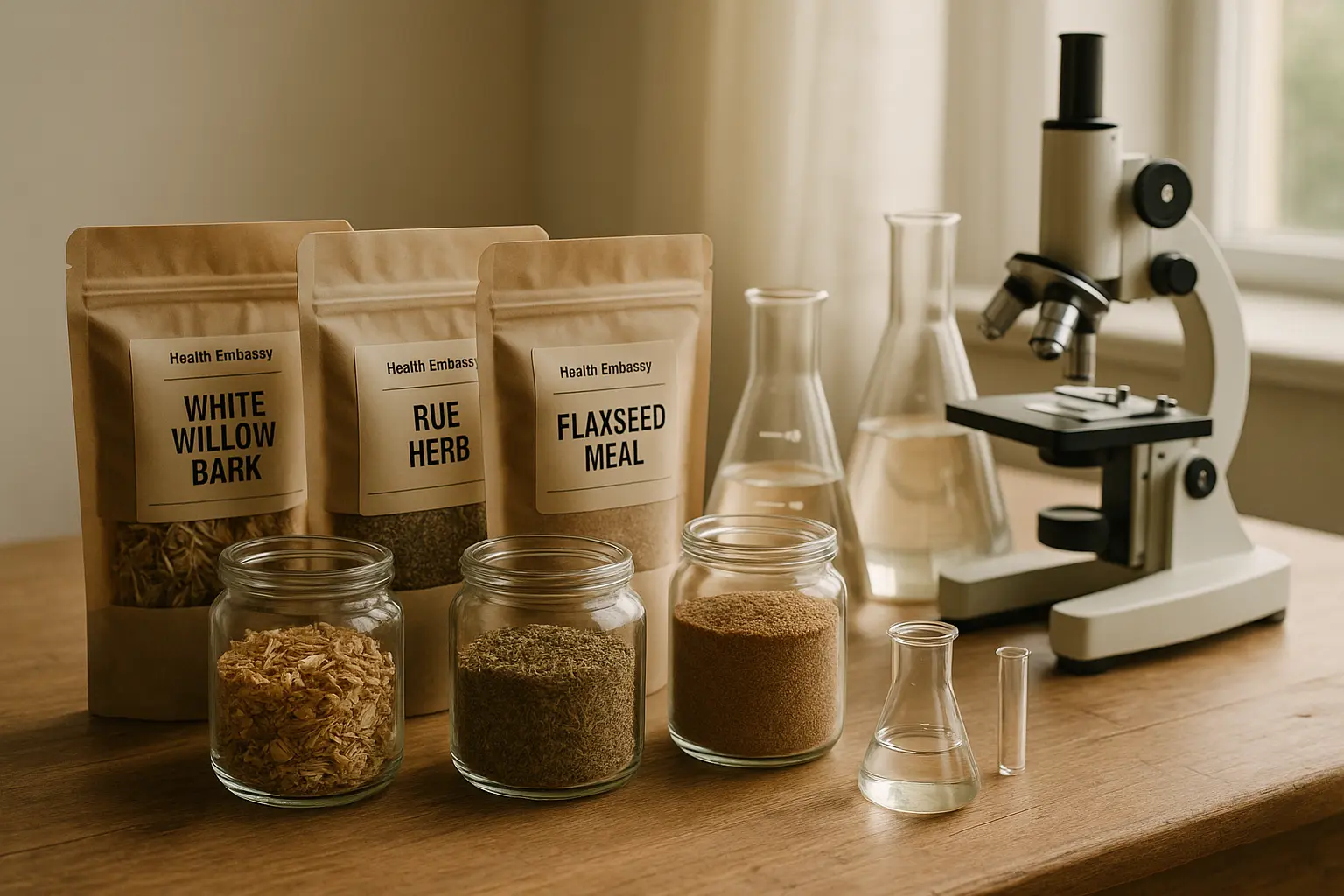
Why Researchers Use Whole Botanicals
In an era of standardized isolates, many research groups still begin with unprocessed plant material to study the phytocomplex—the full ensemble of compounds that coexist in a plant and can act additively or synergistically. Reviews across pharmacognosy and metabolomics have long noted that crude plant extracts or whole‑plant preparations can display activities that are not replicated by single isolated constituents, suggesting meaningful interactions within the plant matrix.
Scientists also pay close attention to bioavailability and matrix effects—how a plant’s physical structure, fibres, and co-constituents influence release and absorption during digestion. Foundational work in food science shows that the matrix and preparation method (e.g., infusion, decoction, cooking) shape what becomes available to the body. Researchers working with Health Embassy herbs and similar whole-plant materials study all compounds together, as their combined effects can be more meaningful than those of isolated ingredients.
Where Health Embassy Herbs Appear in the Literature
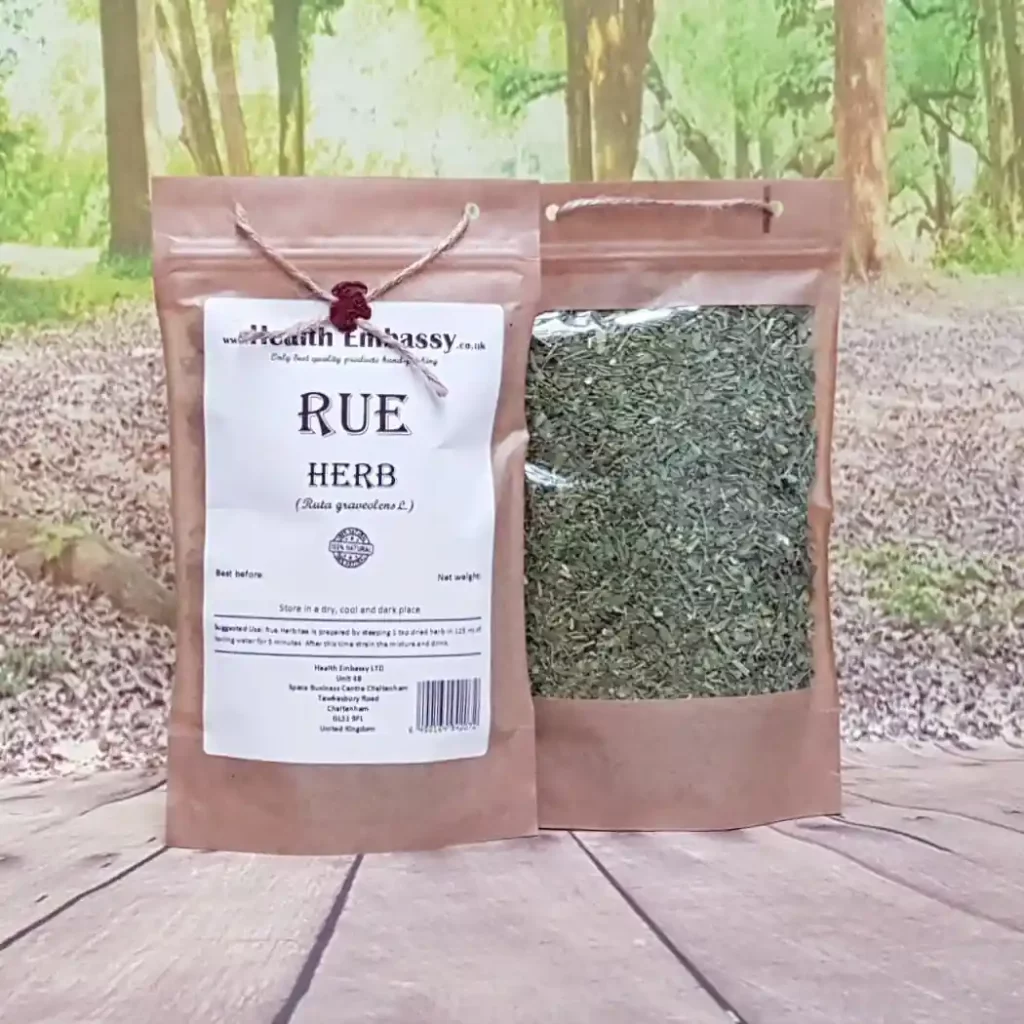
1) Ruta graveolens (Rue Herb) for Controlled‑Release Research
A team in Applied Sciences formulated biodegradable chitosan–alginate microspheres to protect and gradually release the Ruta graveolens phytocomplex. Their plant material (“dried product of Ruta graveolens L.”) was purchased from Health Embassy (Cheltenham, UK). The work investigated encapsulation efficiency and in‑vitro release—an example of laboratories using a whole botanical as the starting point for delivery‑system innovation, not a clinical efficacy claim.
Why it matters: Encapsulation studies probe how fragile phytochemicals can be protected from pH and oxidative stress and delivered in a controlled way—mirroring industry interest in gentle release systems for natural compounds sourced from whole botanicals such as Health Embassy herbs.

2) Linseed (flaxseed) meal for nutrition and bioaccessibility
Two related studies on gluten‑free pasta enriched with vegetable by‑products examined antioxidant composition and bioaccessibility after simulated digestion. In these, Flaxseed Meal was supplied by Health Embassy LTD (Cheltenham, UK). Findings showed that tomato pomace and linseed meal increased selected bioactive components; the follow‑up paper tracked how much of those compounds became bioaccessible after cooking and digestion—information that helps scientists understand whole‑food matrices.
Why it matters: These projects illustrate the practical, real‑food side of phytocomplex research—how by‑products like pomace and meals, used as they are, can change antioxidant profiles and what’s actually released during digestion.
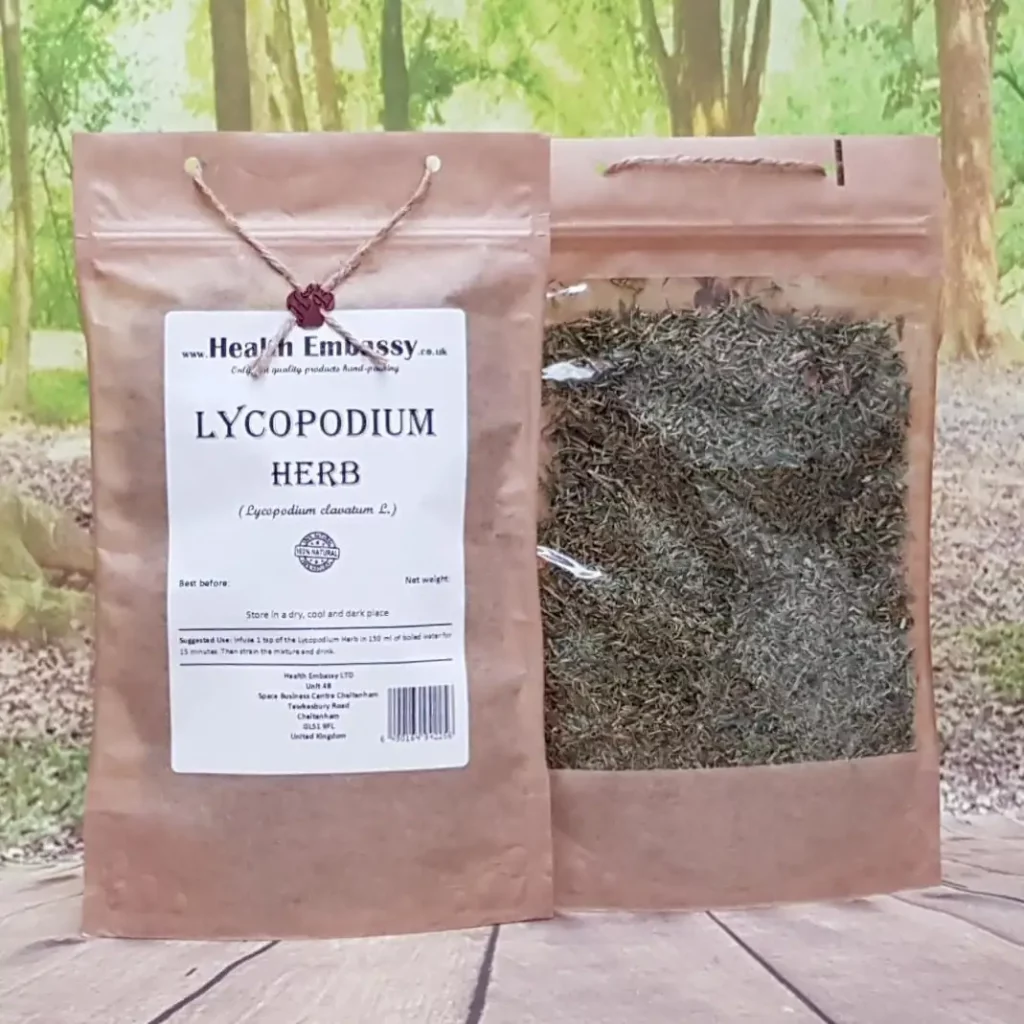
3) Additional appearance: Lycopodium clavatum (Lycopodium Herb) in a preclinical model
In a 2022 preclinical (animal) study exploring Lycopodium clavatum and Withania somnifera, the plant material was sourced as Lycopodium Herb from Health Embassy herbs offer (Cheltenham, UK). The paper assessed biochemical readouts in a rat model; as with any preclinical work, this does not show human health effects and is presented here solely to document material sourcing.
Why it matters: It highlights how research teams rely on authenticated botanical materials to explore plant chemistry under controlled conditions. By noting the exact source of Lycopodium Herb, the study adds transparency and reproducibility to early-stage investigations—important steps before any potential translation to broader scientific understanding of plant-derived compounds.
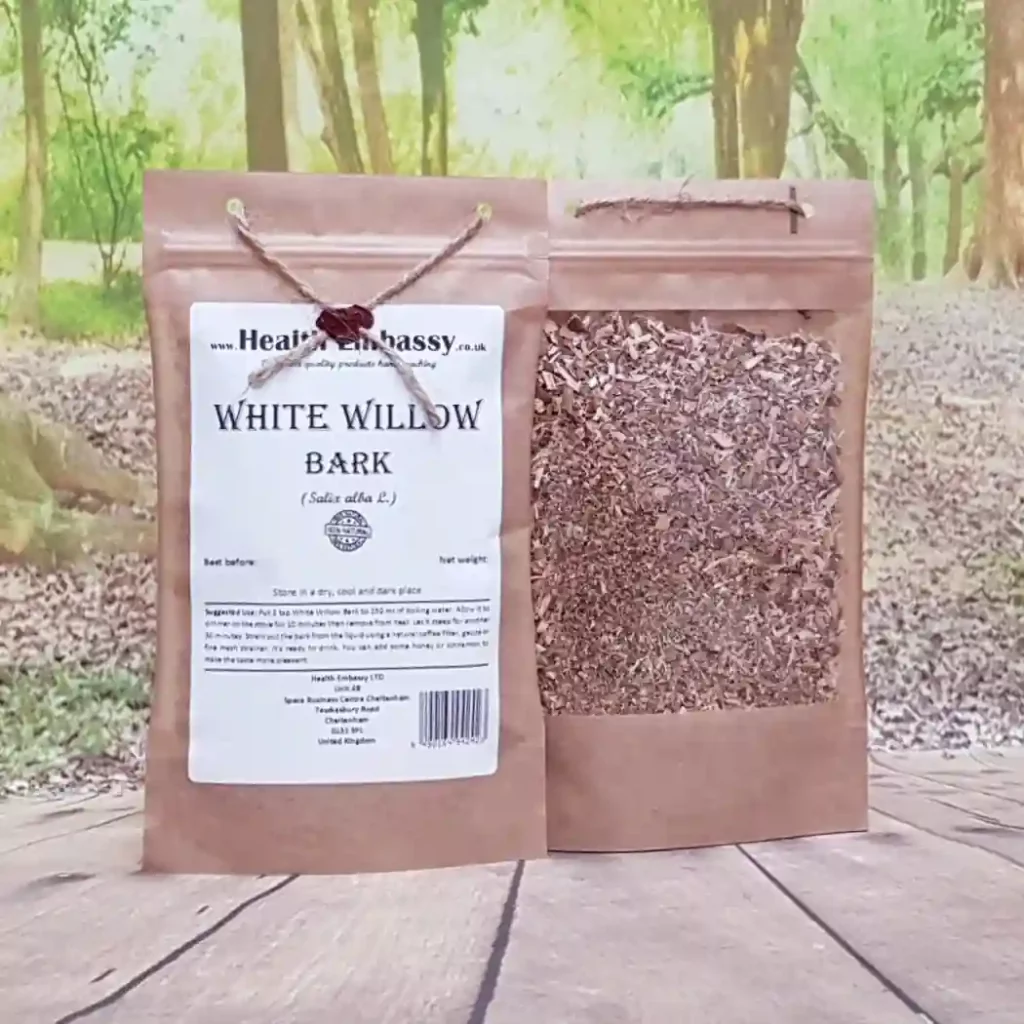
4) Context: White Willow Bark and the ‘whole‑extract’ question
In parallel to brand‑specific sourcing notes above, broader research on White Willow Bark (Salix alba) compares extraction methods (ultrasound, microwave, conventional) and catalogs polyphenols, tannins and salicylates—evidence of the complex ensembles that interest researchers. These studies highlight how method and solvent change the phytochemical profile and in‑vitro properties of the extracts.
Why it matters: This body of work underscores that not all plant extracts are created equal—extraction technique and solvent choice can significantly influence the resulting composition. Such comparative studies help scientists understand how preparation methods affect the balance of naturally occurring compounds in White Willow Bark, informing both analytical research and quality assessment of botanical materials.
Why whole, minimally processed botanicals like Health Embassy herbs are useful to researchers
- Phytocomplex synergy. Whole extracts can outperform isolated constituents in vitro due to additive/synergistic interactions among multiple molecules—an effect repeatedly discussed in the literature.
- Matrix‑guided release. Fibres, proteins and plant architecture modulate how compounds dissolve, transform and become bioaccessible during brewing, cooking or digestion.
- Methodological baselines. Starting from a standard, traceable dried herb allows labs to compare extraction technologies or delivery systems on a like‑for‑like raw input. The rue‑encapsulation work and the pasta bioaccessibility studies are examples of this approach.
How we communicate this responsibly
- No medicinal claims. No medicinal claims. We don’t claim that Health Embassy herbs diagnose, treat or prevent disease.
- Food/food‑supplement claims. We avoid unauthorised claims and stick to verifiable, non‑outcome statements (e.g., sourcing, processing, preparation).
- Clear separation of research from marketing. Cited papers show how researchers used raw botanicals, including Health Embassy herbs, to test methods or explore composition. These references are not endorsements and not evidence of product efficacy.
- We communicate fully in line with UK law—without medicinal claims and clearly separating scientific research from marketing.
What researchers tell us they need
- Clear identity: Researchers value transparency—Latin binomial, plant part, and form (e.g., dried, cut) are essential for replicability, which is why Health Embassy herbs are supplied with clear botanical identification.
- Minimal processing: Supports matrix‑related questions and reduces confounding from additives.
- Consistency and traceability: Lots/batches that can be referenced in methods sections.
- Preparation‑friendly formats: Cut sizes suitable for infusions/decoctions, the same formats traditional methods and many lab protocols start from.
- Scientists require clear plant identification, minimal processing, traceable batches, and easy-to-use formats for experiments—standards consistently met by Health Embassy herbs.
For curious readers: how scientists study “the whole”
- Encapsulation & delivery: Using biopolymers (like chitosan/alginate) to protect phytochemicals and control release. Rue microspheres are a case in point.
- Extraction science: Comparing microwave‑assisted, ultrasound‑assisted and conventional extractions in willow bark to see how profiles shift.
- Food‑matrix bioaccessibility: Tracking how much of a compound remains after cooking and becomes available during digestion, as with the gluten‑free pasta studies.
Research Highlights Featuring Health Embassy Herbs
Sourcing named: Health Embassy appears explicitly as a supplier in:
- Applied Sciences (2023): “Ruta graveolens microspheres—plant material” purchased from Health Embassy (Cheltenham, UK).
- Molecules (2022): Gluten‑free pasta composition/antioxidants—linseed (flaxseed) meal supplied by Health Embassy LTD.
- Foods (2024): Antioxidant bioaccessibility in enriched gluten‑free pasta—study design and findings; the paper’s methods also reference the linseed supplier chain.
- European Online Journal of Natural and Social Sciences (2022): Lycopodium clavatum purchased from Health Embassy LTD (preclinical rat model; not evidence for human efficacy
- Why whole matters: Reviews show phytocomplex synergy and matrix effects can shape activity and bioavailability.
Practical notes for readers
- Traditional preparations: If you’re exploring dried botanicals at home, infusions (pouring hot water over leaves/flowers) and decoctions (simmering tougher parts like bark/roots) are standard culinary/herbal techniques—using the same formats as Health Embassy herbs referenced in lab methods.
- Safety first: Some botanicals are unsuitable during pregnancy, with certain medications, or for specific conditions. If unsure, consult a qualified professional; this article does not offer diagnosis or treatment.
References (selected)
- Ruta graveolens microspheres; materials sourced from Health Embassy herbs.
- Gluten‑free pasta (composition/antioxidants); linseed meal supplied by Health Embassy LTD.
- Lycopodium clavatum (preclinical); purchased from Health Embassy LTD.
- Salix alba extraction comparisons (context for phytocomplex work).
- Synergy/whole‑extract rationale.
- Bioavailability & matrix effects.
Browse the Health Embassy Herbs Mentioned in This Article
For readers who want to explore the exact plant formats referenced in the research examples, here are the corresponding products available in our shop. You can find Rue Herb, Flaxseed Meal (Linseed Meal), and White Willow Bark (Salix alba) in dried form suitable for infusion or experiments. Our Lycopodium Herb is also offered as a traditional dried botanical for preparation and study purposes.
You can view these individual listings directly here:
- Rue Herb (Ruta graveolens L) – Link: https://healthembassy.co.uk/rue-herb-ruta-graveolens-l/
- Flaxseed Meal (Linum usitatissimum L) – Link: https://healthembassy.co.uk/flaxseed-meal-450g-linum-usitatissimum-l/
- White Willow Bark (Salix alba L) – Link: https://healthembassy.co.uk/white-willow-bark-salix-alba-l/
- Lycopodium Herb (Lycopodium clavatum L) – Link: https://healthembassy.co.uk/lycopodium-herb-lycopodium-clavatum-l/
Or, if you prefer to browse our full botanical collection, visit the main catalogue: Shop all Health Embassy Botanicals.
Compliance and consumer notice
This article cites publicly available research to document sourcing in methods sections and to explain scientific concepts (phytocomplex, matrix, bioaccessibility). It does not claim that any Health Embassy herbs treats or prevents disease, nor does it present laboratory findings as consumer outcomes. For personal use of botanicals, seek individual advice if you have any health conditions, are pregnant or breastfeeding.
FAQ – Using Health Embassy Herbs in Research (and What It Means for You)
1. Why do scientists sometimes use whole herbs instead of extracts?
Because plants contain many compounds that work together. Researchers want to see how these compounds behave as a complete natural matrix, not just as a single isolated ingredient.
2. If Health Embassy herbs are mentioned in scientific papers, does it mean the products have proven effects?
Not in that way. Health Embassy herbs were simply used as traceable raw plant material. The studies focus on scientific methods and composition—not on showing results for human health.
3. What exactly is a “phytocomplex”?
It’s the full collection of natural compounds found in a plant. Instead of studying a single molecule, scientists look at the whole spectrum to understand possible interactions within that natural mix.
4. Why is “minimally processed” such a big deal for labs?
Researchers need clean, straightforward plant material—without added ingredients—so they know exactly what they are testing. This makes results easier to interpret and compare.
5. Are the studies mentioned here a form of endorsement?
No. Academic papers list suppliers like Health Embassy simply to document sourcing. It’s a transparency requirement, not a marketing statement or recommendation.
6. Can I prepare these Health Embassy herbs at home like in the research?
You can experiment with simple traditional methods such as infusions or decoctions. These methods are also used in research, but at home they should be seen as culinary or exploratory—not medicinal.
7. Does this blog make any health promises?
No. Everything here is for information and context only. It does not replace personal advice or claim that Health Embassy herbs can treat or prevent any condition.
8. Are the herbal names used in this blog standard in the UK?
Yes. We use the official Latin names along with commonly accepted English names for clarity. This approach ensures consistency in herbal names in the UK, allowing researchers, home users, and anyone browsing Health Embassy herbs to identify botanicals accurately. For example, Ruta graveolens is also known as Rue, and Salix alba as White Willow Bark.
9. What’s the difference between botanicals and herbs?
“Botanicals” is a broad term that refers to any plant-based material used for research, food, or other purposes, including leaves, flowers, seeds, bark, and roots. “Herbs” are a subset of botanicals, typically referring to the leafy or flowering parts of plants used for flavor, infusions, or traditional preparations. In short, all herbs are botanicals, but not all botanicals are herbs.
Disclaimer:
The information provided in this blog post is for general informational purposes only and is based on information available from various online sources. It is not intended to be a substitute for professional medical advice, diagnosis, or treatment. If you have any health conditions, allergies, or are pregnant or breastfeeding, please consult a healthcare professional before consuming herbal products. Health Embassy does not provide medical advice, nor does it diagnose, treat, or cure any medical conditions.
We do not guarantee the accuracy, completeness, or usefulness of any information provided, and you rely on it at your own risk. Individual results may vary. Health Embassy is not responsible for any adverse effects or consequences resulting from the use of any herbal products discussed on this blog.
Olesea Pozdneacov
I love all the research and reading the blog, but I noticed none of the listed products clearly state where the product is from.. meaning, wild harvested, ethical, but where is it from? Is there a reason that is not stated? or am I supposed to contact you via email to enquire?
Health Embassy
Thank you so much for your kind words and for taking the time to read our blog! We’re really happy to hear that you’re enjoying the content.
As for your question — our products come from various regions, depending on the best growing conditions and availability, which is why specific origins may not always be listed directly.
However, we completely understand your curiosity! Please feel free to reach out to us via email — we’ll be happy to provide more detailed information and answer any questions as best as we can.